Healing Touch Self-Care Practice
Talk to your doctor first. General education, not medical advice.This content is general education, not medical advice, diagnosis or treatment. Get approval from your physician or another qualified healthcare provider before starting any exercise program, especially if you have a medical condition, a recent injury or surgery, are pregnant, or take medication. Stop and seek medical advice if an exercise causes pain, dizziness, chest discomfort or shortness of breath. You choose to exercise at your own risk. Read the full medical disclaimer.
- PositionSitting or lying
- You'll needNothing
- LengthAbout 15 min

Part of a free routine
This exercise is one step in a phased home routine. Follow the whole routine, or print it on one page.
Follow a routine with this exercise, day by day
Fibromyalgia & Chronic Pain, phase 1
Opens a free daily checklist with videos and a printable tracker. No sign-up.
Physical therapist or assistant? Add this exercise to a patient’s home program →
Clinical Context
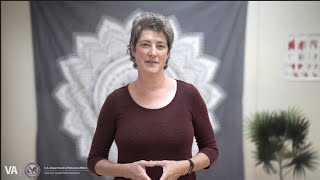
Healing Touch is an energy-based complementary approach for pain management, stress reduction, and overall well-being. This self-care version teaches patients to use gentle hand placements and intentional focus to promote relaxation and support the body’s innate healing capacity.
While the mechanisms of energy-based therapies remain an area of active research, the clinical outcomes are well-documented. A 2017 systematic review of Healing Touch for pain management found significant reductions in pain intensity and anxiety, with effects attributed to a combination of relaxation response induction, therapeutic intention, and the neurological effects of gentle touch on the autonomic nervous system.
For chronic pain patients, Healing Touch self-care provides an empowering self-management tool — a technique that requires no equipment, no physical exertion, and can be practiced anywhere. The practice of placing hands intentionally on areas of the body and directing attention to those areas has been shown to increase local blood flow, reduce muscle tension, and activate the parasympathetic nervous system.
Step-by-Step Instructions
- Find a quiet, comfortable space. You can sit or lie down.
- Begin with several deep breaths to center yourself.
- Follow the instructor’s guidance for hand placements — typically on the chest, abdomen, head, or areas of pain.
- Hold each position for 2–3 minutes, breathing gently and focusing your attention on the area under your hands.
- Notice any sensations — warmth, tingling, softening, or simply quiet. There is no “right” sensation.
- Complete the full guided sequence and take a moment to notice how you feel afterward.
Key Form Cues
- Light touch: Hands rest gently on the body — no pressure needed.
- Intentional focus: Direct your attention to the area under your hands with a sense of care and healing.
- Patience: Allow 2–3 minutes per position. Subtle effects build over time.
Progression & Regression
Regression
- Practice for just 5 minutes initially
- Focus on one hand position that feels most comforting
- Use this as a bedtime relaxation ritual
Progression
- Extend sessions to 20–30 minutes
- Learn additional hand positions for specific conditions
- Combine with diaphragmatic breathing for enhanced effect
- Practice daily as part of a comprehensive pain management routine
Precautions
No physical risks. Universally safe.
- This is a complementary practice — it supplements but does not replace medical treatment.
- There are no contraindications to gentle hand placement and intentional focus.
- Patients should not expect immediate dramatic results — benefits typically build over consistent practice.
Related Exercises
Try next


Anderson JG, Taylor AG. Effects of Healing Touch in clinical practice: a systematic review of randomized clinical trials. J Holist Nurs. 2011;29(3):221-228.
Jain S, et al. Healing Touch with Guided Imagery for PTSD in returning active duty military. Mil Med. 2012;177(9):1015-1021.
Wardell DW, Weymouth KF. Review of studies of healing touch. J Nurs Scholarsh. 2004;36(2):147-154.
Find More Exercises
Browse the full Exercise Archive — 213 exercises with videos, organized by body region, type, and difficulty.