Knee Osteoarthritis
Talk to your doctor first. General education, not medical advice.This content is general education, not medical advice, diagnosis or treatment. Get approval from your physician or another qualified healthcare provider before starting any exercise program, especially if you have a medical condition, a recent injury or surgery, are pregnant, or take medication. Stop and seek medical advice if an exercise causes pain, dizziness, chest discomfort or shortness of breath. You choose to exercise at your own risk. Read the full medical disclaimer.
Free daily checklist
Follow this routine day by day
Open a checklist on your phone with the videos, a tick box for each exercise and your last 7 days. You can print a tracker too. No sign-up: your check marks stay on your device.
Start with phase 1 unless your clinician tells you otherwise, and move on when it feels easy. Physical therapist or assistant? Customize this routine for a patient.
Recommended Exercise Sequence
Progress from low-impact, seated exercises to weight-bearing strengthening as pain allows. Protocols are ordered by intensity.
Get one exercise a week by email
A short video, simple steps and a free printable routine, every Tuesday. Free, and you can unsubscribe anytime.
We only use your email for this newsletter. Privacy policy
Video Demonstrations
Watch these exercise demonstrations from the protocols referenced above to ensure proper form.
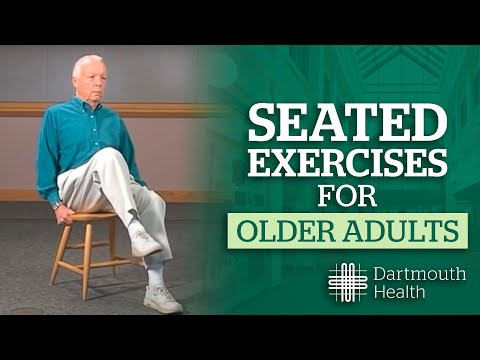
Seated Leg Extensions
Phase 1 gentle exercise for knee mobility and pain relief
Why this exercise for knee osteoarthritis
Clinical rationale
Seated leg extensions activate the quadriceps in an open-chain, non-weight-bearing position. For knee OA, this builds quad strength without compressive joint loading. Quad strength is the biggest modifiable predictor of OA-related disability per OARSI guidelines.
Modifications
- Add ankle weight once 10-15 reps feel easy
- Hold the top 2-3 seconds isometrically
Safety
- Stop if the knee feels unstable, gives way, or locks
Pairs with: Phase 1 – Pain Relief & Range of Motion.

Wall Squats for Quadricep Strength
Phase 2 strengthening exercise for quadricep and knee support
Why this exercise for knee osteoarthritis
Clinical rationale
Wall squats train the vastus medialis and gluteus medius in closed-chain functional loading without overloading the patellofemoral joint. Closed-chain quad strengthening has the strongest evidence base for reducing OA pain at 12 weeks.
Modifications
- Start shallow (30-45 degrees) and deepen over weeks
- Hold the bottom 5-10 seconds isometrically
Safety
- Knees track over the second toe, not collapsing inward
Pairs with: Phase 2 – Strengthening.
Exercise Tips for Success
Quadricep strength is the #1 modifiable factor. Research consistently shows that quadricep weakness precedes and predicts knee OA progression. Phase 2 strengthening exercises are the most important part of this protocol.
Exercise through mild discomfort, not pain. Some muscle soreness during and after exercise is normal. The 24-hour rule applies: if your knee is significantly worse 24 hours after exercise, you did too much. Scale back intensity.
Ice after exercise if needed. Applying ice for 15–20 minutes after exercise can help manage post-exercise swelling. Do not ice before exercise, as numbing the joint removes important pain feedback.
Balance and proprioception matter. Phase 3 includes balance exercises because knee OA impairs joint position sense. Improving proprioception reduces fall risk and helps the muscles respond faster to protect the joint.
What to Expect
Expect gradual improvement over 6–12 weeks, with benefits that grow the longer you keep going. Exercise may cause some extra stiffness or aching at first; this usually settles. Stairs, walking distance and getting up from a chair are often the first things to improve. Flare-ups happen: ease off for a few days but keep moving. Regular exercise 2–3 times a week or more helps maintain the benefit.
When to See a Provider
- Sudden joint locking or inability to fully extend the knee (possible loose body or meniscal tear)
- Hot, red, swollen joint with fever (possible septic arthritis — seek emergency care)
- Rapid onset of severe swelling without trauma (possible gout or pseudogout)
- Progressive deformity or instability (giving way episodes)
- Night pain unrelieved by position changes
- Numbness or tingling below the knee
BackgroundAbout Knee Osteoarthritis: overview, why exercise helps, symptoms and risk factors
Condition Overview
Knee osteoarthritis (OA) is the most common joint disease worldwide, affecting over 250 million people. It is characterized by progressive cartilage degradation, subchondral bone changes, and synovial inflammation leading to pain, stiffness, and loss of function. All major clinical guidelines (ACR, OARSI, VA/DoD, NICE) recommend exercise therapy as a core first-line treatment. Structured strengthening — particularly of the quadriceps and hip abductors — reduces knee joint loading, improves shock absorption, and can delay or prevent the need for joint replacement.
Why Exercise Helps
- Reduces pain comparable to NSAIDs — Meta-analyses show exercise produces pain reduction equivalent to oral anti-inflammatories with no systemic side effects.
- Strengthens joint stabilizers — Quadriceps weakness is both a risk factor for and consequence of knee OA; progressive resistance training helps counter this cycle.
- Preserves cartilage health — Moderate loading stimulates proteoglycan synthesis and synovial fluid production, nourishing remaining cartilage.
- Improves balance and reduces fall risk — Proprioceptive deficits in knee OA increase fall risk; balance training significantly reduces this.
- Delays surgical intervention — Consistent exercise programs can postpone total knee replacement by several years.
Common Symptoms
Knee osteoarthritis typically develops gradually with pain that worsens with activity and improves with rest. Common symptoms include stiffness lasting less than 30 minutes after waking or after prolonged sitting, swelling around the knee joint, a grinding or crunching sensation (crepitus) during movement, and progressive difficulty with stairs, squatting, and walking on uneven ground. Many people notice increased pain with weather changes and a gradual decrease in knee range of motion, particularly with full bending or straightening. In advanced stages, the knee may feel unstable or give way, and visible joint deformity (bowing) may develop.
Risk Factors
- Age — Risk increases significantly after age 50 as cartilage loses resilience
- Previous knee injury — ACL tears, meniscus injuries, and fractures dramatically increase risk
- Obesity — Each pound lost reduces knee joint load by approximately 4 pounds
- Muscle weakness — Weak quadriceps fail to absorb shock and protect cartilage
- Female sex — Women develop knee OA at nearly twice the rate of men after age 55
- Occupational kneeling — Jobs requiring frequent squatting, kneeling, or heavy lifting
- Alignment issues — Bow legs (varus) or knock knees (valgus) create uneven cartilage wear
Frequently Asked Questions
Is exercise good for knee osteoarthritis or will it make it worse?
Exercise is a commonly recommended treatment for knee OA. Major guidelines from the ACR, NICE, and OARSI all recommend it as a core treatment. Properly structured exercise strengthens the muscles supporting the knee, reduces stiffness, and can decrease pain. It does not accelerate cartilage loss.
What are the best exercises for knee osteoarthritis?
Evidence supports a combination of quadriceps strengthening (straight leg raises, wall sits, quad sets), range-of-motion exercises, and low-impact aerobic activity like cycling, swimming, or walking. Strengthening the muscles around the knee is particularly important for reducing pain and improving function.
How long before exercise helps knee arthritis pain?
Many people notice less stiffness within a few weeks. Pain relief usually builds over 6–12 weeks of regular exercise, and the benefits grow the longer you keep going. Cochrane reviews have found that exercise reduces knee osteoarthritis pain and improves function.
Can I exercise with bone-on-bone knee arthritis?
Yes, even with severe OA. Low-impact exercises like water-based therapy, stationary cycling, and seated strengthening exercises can improve function and reduce pain without excessive joint stress. The key is starting at an appropriate intensity and progressing gradually.
Should I use heat or ice with knee OA exercises?
Heat before exercise helps loosen stiff joints and increase blood flow. Ice after exercise can reduce any temporary swelling or soreness. Both are safe adjuncts to your exercise routine and can be used as needed for comfort.
Will I eventually need a knee replacement?
Not necessarily. Many people with knee osteoarthritis manage their symptoms for years without a replacement. Keeping to a healthy weight, building quadriceps and hip strength, and staying active are the steps most consistently linked with less pain and better function. A regular exercise program may help delay or avoid surgery for some people, but it is not right for everyone. Your doctor can help you weigh the options, including how often steroid injections are reasonable for you.
Is strengthening or stretching better for knee OA?
Strengthening has the stronger evidence. Guidelines put structured exercise, especially strengthening, at the core of care; stretching plays a smaller supporting role. See the comparison: Strengthening vs Stretching for Knee OA.
Should I avoid squats and lunges?
Not usually. Wall sits, partial squats and step-ups are common parts of knee osteoarthritis programs. The key is dose and form: start with a depth and load you can manage without sharp pain, and build up gradually.
Are glucosamine and chondroitin worth taking?
High-quality evidence does not support them. The American College of Rheumatology recommends against glucosamine and chondroitin for knee osteoarthritis, and NICE does not recommend glucosamine. They are generally safe, but exercise and weight management have far better evidence.
What about cortisone injections?
Cortisone injections can give short-term relief (weeks to a few months) during a flare, but they don’t change the course of the disease. One trial linked repeated injections with greater cartilage loss, so they are usually used sparingly, often to make exercise easier.
Is walking good or bad for knee OA?
Good, for most people. Walking is one of the activities guidelines recommend for knee osteoarthritis, and it does not wear the knee out faster. Start with a distance you can manage without a big flare, and increase gradually.
References
- Kolasinski SL, et al. 2019 ACR/Arthritis Foundation guideline for the management of osteoarthritis. Arthritis Care Res. 2020;72(2):149-162. PubMed
- Fransen M, et al. Exercise for osteoarthritis of the knee. Cochrane Database Syst Rev. 2015;1:CD004376. PubMed
- NICE Guideline CG177: Osteoarthritis: care and management. Updated 2022. NICE.org.uk
- Bannuru RR, et al. OARSI guidelines for the non-surgical management of knee OA. Osteoarthritis Cartilage. 2019;27(11):1578-1589. PubMed
- Uthman OA, et al. Exercise for lower limb osteoarthritis: systematic review. BMJ. 2013;347:f5555. PubMed
Deep dive
What the evidence actually says about knee osteoarthritis
Knee osteoarthritis is the most common form of arthritis in adults. By age 65, roughly half of all adults show some radiographic evidence of knee OA, though only a fraction of those people have significant pain or disability. The disconnect between imaging findings and symptoms matters: knee OA is not purely a “wear and tear” problem, and pain doesn’t track tightly with how the joint looks on X-ray.
What the major guidelines recommend
OARSI 2019 Guidelines: Strong recommendation for land-based exercise, weight management, and self-management/education as core treatments for ALL knee OA patients. Strong recommendation against arthroscopic surgery for degenerative knee disease.
American College of Rheumatology (ACR, 2019): Strongly recommends exercise, weight loss (if overweight), self-efficacy and self-management programs, tai chi, and cane use (if needed). Strongly recommends against glucosamine, opioids, and stem cell injections.
NICE (UK, 2022): Therapeutic exercise is the first-line management for all people with knee OA, regardless of age, severity, comorbidities, or pain levels. Topical NSAIDs are first-line for medication if needed. Joint replacement is reserved for symptoms that severely impact quality of life and have not responded to non-surgical care.
Why exercise works for knee OA (when intuition says it shouldn’t)
The intuitive concern — “if my knee hurts because the cartilage is worn down, won’t exercise wear it down faster?” — is one of the most thoroughly disproven ideas in musculoskeletal medicine. Studies suggest:
- Strengthening the quadriceps can reduce knee pain and improve function
- Stronger quads have been linked with less cartilage loss over time, not more
- Knee joint loading during walking and squatting helps maintain cartilage health — cartilage is nourished by movement-driven fluid exchange
- Sedentary behavior is associated with WORSE OA progression, not better
The mechanism is part biomechanical (strong muscles offload the joint), part biochemical (movement reduces inflammatory cytokines in the joint), and part neuromuscular (better coordination reduces awkward loading patterns).
Why it happens — the modern understanding of knee OA
Knee OA is now understood as a whole-joint disease involving cartilage, bone (subchondral changes), the synovium (low-grade inflammation), and the surrounding muscles and ligaments. Risk factors fall into three groups:
- Modifiable: body weight, quad weakness, sedentary behavior, prior injury management, sleep quality, smoking
- Partially modifiable: alignment (varus/valgus), occupational loading, sport history
- Non-modifiable: age, sex (women have higher rates), genetics, prior trauma
The good news: the most impactful risk factors are the modifiable ones. Even small reductions in body weight produce large reductions in knee load (about 4 pounds of load per step for each 1 pound of body weight lost). Even modest gains in quadriceps strength may help reduce pain for some people.
When knee pain is not just OA
Most knee pain in adults over 50 is OA-related and safe to manage with conservative care. But see a doctor before starting a program if you have:
- Sudden severe knee pain following injury (possible ligament or meniscus tear requiring evaluation)
- Knee that is hot, red, and swollen — especially with fever (possible septic arthritis — medical emergency)
- Inability to bear any weight on the leg
- Knee locking, catching, or giving way unexpectedly
- Significant new swelling in someone on blood thinners
- Bilateral severe symptoms in someone under 40 (consider inflammatory arthritis evaluation)
What to expect from a 12-week strengthening program
- Weeks 1–2: Expect some muscle soreness as quads, glutes, and calves wake up. Pain during the exercises is okay if it stays under 4/10 and returns to baseline within 24 hours.
- Weeks 3–4: Strength improvements precede pain improvements. You’ll notice stairs feel easier before you notice general pain change.
- Weeks 5–8: Pain reductions become noticeable. Many people notice a meaningful reduction in pain by this point.
- Weeks 9–12: Function improvements (walking distance, sit-to-stand speed, getting up off the floor) become substantial.
- Long-term: Effects persist as long as practice continues. A 2–3 session per week maintenance dose preserves gains for years.
Want a printable plan you can stick to the fridge?
Browse free PDF handouts by conditionWhen you’re ready to build up walking or cycling
Free, printable week-by-week plans with readiness checks and a simple pain rule. If you’re under a physical therapist’s care, check with them first.
Considering a knee injection or replacement? (UK and Ireland)
Whether the NHS, private health insurance or the HSE usually pays, what self-pay costs, and what to ask first.
- Knee and hip steroid injections: NHS, insurance and cost
- Can you get a knee or hip injection on the NHS?
- Private knee and hip injection prices
- Hip and knee replacement: NHS, insurance and cost
- NHS criteria and BMI rules for joint replacement
- All coverage guides
In the US? Medicare and insurance coverage in the US
In Canada or Australia? Coverage in Canada · Coverage in Australia
Having surgery? Exercises before a hip or knee replacement, after a knee replacement, after a hip replacement (all recovery guides).
Evidence checks
Wondering about supplements for knee arthritis? What the research actually says: