Fall Prevention for Seniors
Talk to your doctor first. General education, not medical advice.This content is general education, not medical advice, diagnosis or treatment. Get approval from your physician or another qualified healthcare provider before starting any exercise program, especially if you have a medical condition, a recent injury or surgery, are pregnant, or take medication. Stop and seek medical advice if an exercise causes pain, dizziness, chest discomfort or shortness of breath. You choose to exercise at your own risk. Read the full medical disclaimer.
Free daily checklist
Follow this routine day by day
Open a checklist on your phone with the videos, a tick box for each exercise and your last 7 days. You can print a tracker too. No sign-up: your check marks stay on your device.
Start with phase 1 unless your clinician tells you otherwise, and move on when it feels easy. Physical therapist or assistant? Customize this routine for a patient.
Recommended Exercise Sequence
Begin with seated and supported exercises, progressing to standing balance challenges. Always have a sturdy surface nearby for support.
Related decisions & resources
Related decisions for fall prevention and aging well:
Get one exercise a week by email
A short video, simple steps and a free printable routine, every Tuesday. Free, and you can unsubscribe anytime.
We only use your email for this newsletter. Privacy policy
Video Demonstrations
Watch these exercise demonstrations from the protocols referenced above to ensure proper form.
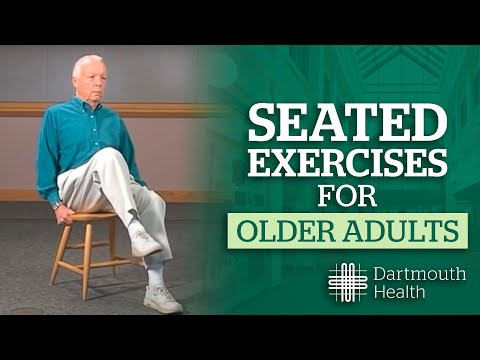
Seated Leg Extensions
Phase 1 seated exercise for building foundational strength safely

Wall Squats for Quadricep Strength
Phase 2 standing balance exercise with support options
Exercise Tips for Success
Safety first — always have support nearby. Perform standing exercises next to a sturdy counter, chair back, or wall. Use the support as needed and gradually reduce reliance as balance improves. Never exercise in socks on slippery floors.
Seated exercises are not “less than.” Phase 1 seated exercises build the foundational leg and core strength needed for safe standing work. Mastering these first creates the muscle base that makes balance training effective and safe.
Practice getting up from the floor. Knowing how to safely get up after a fall reduces injury risk and fear. Practice this skill regularly with a caregiver or family member nearby, using a chair for support.
Consistency prevents decline. Studies suggest that balance and strength can be significantly improved at any age, but improvements are lost within 2–4 weeks of stopping. Aim for exercises at least 3 times per week as a lifelong habit.
What to Expect
In trials, programs that reduced falls usually ran for several months, and more total exercise brought bigger benefits. Many people feel steadier and more confident within a few weeks. Feeling slightly unsteady when you first challenge your balance is normal, so always exercise next to a wall, counter or sturdy chair. The benefits fade if you stop, so aim to keep strength and balance exercises in your week long term.
When to See a Provider
- Fall with head injury — seek immediate medical evaluation
- Sudden onset of dizziness, vertigo, or room spinning (possible vestibular or cardiovascular event)
- New or worsening unsteadiness after starting a new medication
- Progressive weakness in one or both legs
- Unexplained falls (falls without a clear trip or slip)
- Visual changes accompanying balance problems
- Fainting or near-fainting episodes
BackgroundAbout Fall Prevention for Seniors: overview, why exercise helps, symptoms and risk factors
Condition Overview
Falls are the leading cause of injury-related death and hospitalization in adults over 65, with one in four older Americans falling each year. Fall risk is multifactorial — involving muscle weakness, balance deficits, gait abnormalities, visual impairment, and medication effects. Exercise that includes balance training, lower-body strengthening and gait practice is a core part of fall-prevention programs such as the CDC’s STEADI initiative. Tai chi has also been studied for fall prevention, with encouraging results in several trials.
Why Exercise Helps
- Improves balance reactions — Training the vestibular and proprioceptive systems enhances automatic postural responses needed to prevent falls.
- Builds lower-body strength — Quadriceps and ankle strength are critical for recovering from trips and stumbles.
- Increases walking confidence — Fear of falling itself becomes a risk factor; progressive balance training rebuilds confidence in mobility.
- Enhances gait quality — Stride length, step height, and walking speed improve with targeted training, reducing trip risk.
- Maintains independence — Functional mobility is the strongest predictor of ability to live independently.
Common Symptoms
Fall risk often develops silently through a combination of physical and environmental warning signs. Common indicators include unsteadiness when walking or turning, needing to grab furniture or walls for support, a history of near-falls or actual falls in the past year, difficulty rising from a chair without using hands, and reduced confidence in balance during daily activities. Many older adults develop a cautious, shuffling gait with shorter steps, avoid activities they once enjoyed due to fear of falling, and experience dizziness when changing positions (orthostatic hypotension). Muscle weakness, particularly in the legs and core, reduced sensation in the feet, and visual changes all contribute to increased fall risk.
Risk Factors
- Previous falls — The strongest predictor of future falls; one fall doubles the risk of another
- Muscle weakness — Leg and core strength decline approximately 1–2% per year after age 50
- Balance impairments — Vestibular changes and reduced proprioception with aging
- Medication use — Sedatives, blood pressure medications, and polypharmacy (4+ medications)
- Vision problems — Cataracts, glaucoma, macular degeneration, and bifocal/progressive lenses
- Home hazards — Loose rugs, poor lighting, cluttered pathways, and bathroom without grab bars
- Chronic conditions — Arthritis, diabetes, neuropathy, stroke, and Parkinson’s disease
Frequently Asked Questions
What are the best exercises to prevent falls in seniors?
Cochrane reviews identify balance training, lower body strengthening, and tai chi as well-supported exercises for fall prevention. A combination of standing balance challenges (tandem stance, single-leg balance), leg strengthening (sit-to-stand, heel raises), and gait training provides the best results.
How effective is exercise at reducing falls?
This is one of the better-studied areas in older-adult health. A major Cochrane review by Sherrington et al. found that exercise programs reduce the rate of falls by approximately 23% and the number of people experiencing falls by 15%. Programs that specifically challenge balance are commonly recommended.
Is it safe for elderly people to exercise at home alone?
Yes, with proper precautions. Always exercise near a sturdy chair or counter for support. Start with seated exercises if standing feels unsteady. Remove tripping hazards from the exercise area. If you have a history of falls or significant balance issues, consult your healthcare provider before starting.
How often should seniors do balance exercises?
The NHS recommends strength and balance activities on at least 2 days a week for older adults. Programs that reduced falls in trials usually ran about 3 times a week for several months, and more total exercise was linked with bigger benefits. Short, regular sessions are easier to keep up.
Is tai chi good for preventing falls?
Tai chi is one of the best-studied exercise types for preventing falls. It works on balance, leg strength and confidence together. A trial in people with Parkinson’s disease (NEJM, 2012) also found it improved balance.
At what age should someone start fall prevention exercises?
The US CDC’s fall-prevention program focuses on adults aged 65 and over, but starting earlier is reasonable if you have risk factors such as a previous fall, balance problems, vision changes or medicines that cause dizziness.
I haven’t fallen — do I really need balance training?
If you are 65 or older, it is a good idea. A previous fall is one of the strongest predictors of another, but many people have a first fall without warning. Building balance and strength before a fall is easier than afterward, when fear of falling can lead to doing less.
Are walking and gardening enough?
They help with general conditioning but don’t specifically reduce falls. Balance training requires being CLOSE to the limits of postural control — something walking on a flat surface does not do. Add 10-15 minutes of dedicated balance work to your routine, ideally 3 times per week.
Is yoga as good as tai chi for falls?
Tai chi has more evidence specific to falls. Yoga can improve balance and flexibility, and if yoga is what you will actually keep doing, it is a reasonable choice.
Should I use a walker or cane?
Possibly, but get fitted properly — improper fit increases fall risk. A PT or OT can size a walker or cane, teach proper use, and reassess as your strength changes. Many people use mobility aids unnecessarily because they were never reassessed; others avoid them when they actually need them. The decision should be re-evaluated yearly.
What about strength training with weights?
Recommended, alongside balance work. In a 2019 Cochrane review, programs that combined balance and functional exercises with strength training reduced the rate of falls by about a third. Even bodyweight or resistance-band exercises help older adults who are new to strength training.
Can I do this at home or do I need a class?
Both can work. Group classes help some people stick with it; others prefer home routines. What matters most is keeping it up for months. Many Area Agencies on Aging and YMCAs in the US, and many NHS and council services in the UK, offer programs such as Otago or tai chi classes.
References
- Sherrington C, et al. Exercise for preventing falls in older people. Cochrane Database Syst Rev. 2019;1:CD012424. PubMed
- CDC STEADI Initiative: Stopping Elderly Accidents, Deaths & Injuries. Updated 2023. CDC.gov
- Li F, et al. Tai chi and postural stability in patients with Parkinson’s disease. N Engl J Med. 2012;366(6):511-519. PubMed
- VA/DoD Clinical Practice Guideline for Fall Prevention. 2020. VA.gov
- Gillespie LD, et al. Interventions for preventing falls in older people. Cochrane Database Syst Rev. 2012;9:CD007146. PubMed
Deep dive
What the evidence says about fall prevention in older adults
Falls are the leading cause of injury-related death in adults over 65 in the United States. One in four older adults falls each year. About 20% of falls cause serious injury — most commonly hip fractures and head injuries — and a hip fracture in someone over 75 carries a one-year mortality of roughly 20-30%. This is not a minor problem. But it’s also one of the most modifiable risks in older-adult health, because exercise programs are consistently associated with lower fall rates in trials.
What the major guidelines recommend
CDC STEADI (Stopping Elderly Accidents, Deaths & Injuries): Annual fall risk screening for everyone 65+. Multifactorial assessment for anyone who has fallen, reports balance problems, or has gait abnormalities. Specific exercise programs (Otago, Tai Chi: Moving for Better Balance) are first-line interventions.
USPSTF (US Preventive Services Task Force): Recommends exercise interventions for community-dwelling adults 65 and older at increased risk for falls. Grade B recommendation (moderate certainty of moderate net benefit). Tai chi specifically is highlighted.
2019 Cochrane Review on exercise for fall prevention: High-quality evidence that exercise programs targeting balance and functional ability reduce falls by 24% in community-dwelling older adults. Programs that include both balance training and resistance training are associated with lower fall rates.
Why most “balance exercises” don’t actually reduce falls
Generic “balance work” — standing on a wobble board for a few minutes, the occasional single-leg stance during routine exercise — produces minimal fall reduction. What works is dose- and specificity-controlled training that pushes the postural control system close to its limits 2-3 times per week for 12+ weeks.
The Otago Exercise Program — the most thoroughly studied fall prevention protocol — requires:
- Strength training of legs and trunk (sit-to-stands, step-ups, half-squats, side hip exercises) progressing in difficulty
- Balance training that progressively reduces the base of support (two-foot → tandem → single-leg) and adds dual-task complexity (head turns, talking)
- Walking (or seated equivalent) for cardiovascular conditioning
- Performed 3 times per week, 30 minutes per session, for at least 6 months
- Coach or self-led progression with regular check-ins
The dose matters. Doing balance work casually for 5 minutes a day does not produce the same effect.
Why tai chi works particularly well
In a large 2018 JAMA Internal Medicine trial of adults aged 70 and over, a tai ji quan program cut falls by 58% compared with stretching and by 31% compared with a conventional multi-component exercise program. Other trials and reviews also find tai chi lowers fall rates, though the size of the benefit varies. The mechanism:
- Continuous weight shifting and single-leg loading in every movement
- Slow controlled motion at the edge of postural stability
- Multi-planar movement and rotation, training reactive balance
- Cognitive engagement (sequencing movements) trains dual-task capacity
- Group classes provide adherence support that solo home programs lack
For someone deciding between a generic balance class and a tai chi class, tai chi has the stronger evidence. See the comparison: Tai Chi vs Yoga (the falls-prevention evidence for tai chi parallels its evidence for chronic pain).
Risk factors beyond exercise — what else to address
Exercise is the highest-leverage intervention, but a comprehensive fall-prevention approach also addresses:
- Medication review: Polypharmacy (5+ medications), particularly benzodiazepines, opioids, anticholinergics, certain antidepressants, and antihypertensives that cause orthostatic hypotension. Have a pharmacist or geriatrician review the list.
- Vision: Annual eye exam, updated prescription, cataract evaluation if present. Bifocals can paradoxically increase falls — separate single-vision glasses for walking are often better.
- Vitamin D: Deficiency contributes to muscle weakness. The USPSTF supports supplementation in deficient older adults but not universal supplementation.
- Home hazards: Loose rugs, poor lighting, missing grab bars in bathrooms, absent stair rails — the AGS recommends a home safety assessment.
- Orthostatic hypotension: Blood pressure drop on standing >20 mmHg systolic. Address with medication adjustment, hydration, and slow positional changes.
- Footwear: Avoid slippers and bare feet for walking at home. Supportive shoes with a defined heel counter and non-slip sole significantly reduce fall risk.
When to get medical evaluation before starting an exercise program
- You’ve had a fall in the last 3 months — see your primary care for a multifactorial fall assessment
- Recurrent falls (2 or more in 12 months) — needs workup for underlying causes
- New unsteadiness, dizziness, or fainting episodes (consider cardiac, vestibular, or neurologic causes)
- Severe peripheral neuropathy or proprioceptive loss (program needs adaptation)
- Acute joint pain or back pain limiting weight-bearing
- Uncontrolled cardiac arrhythmia or chest pain with exertion
- Recent hip or back surgery (need clearance and protocol adjustments)
What to expect from a 12-week balance and strength program
- Weeks 1-2: Quad and gluteal strength is usually the limiting factor. Sit-to-stand reps improve quickly.
- Weeks 3-4: Single-leg balance time often doubles. Walking feels more confident.
- Weeks 5-8: Dual-task capacity expands. You can walk and talk, walk while turning your head, navigate uneven surfaces with less effort.
- Weeks 9-12: Self-rated fall confidence improves. Activities you’d been avoiding (gardening, stairs, walking outdoors) re-enter the routine.
- 6+ months: Population-level fall reduction effects emerge. The protective effect compounds with sustained practice.
Want a printable plan you can stick to the fridge?
Browse free PDF handouts by conditionEvidence checks
Wondering whether vitamin D helps? What the research actually says: