Hamstring Stretch with a Strap (Lying)
Talk to your doctor first. General education, not medical advice.This content is general education, not medical advice, diagnosis or treatment. Get approval from your physician or another qualified healthcare provider before starting any exercise program, especially if you have a medical condition, a recent injury or surgery, are pregnant, or take medication. Stop and seek medical advice if an exercise causes pain, dizziness, chest discomfort or shortness of breath. You choose to exercise at your own risk. Read the full medical disclaimer.

Build a full routine
This exercise isn’t on one of our printable sheets yet. These free routines cover similar ground:
Physical therapist or assistant? Add this exercise to a patient’s home program →
Why it helps
Tight hamstrings can limit how far you bend forward and add strain on the lower back and knee. Lying down keeps the back supported and lets you relax into the stretch.
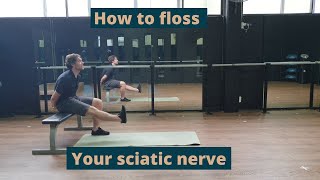
The strap lets you control the stretch without straining to reach your foot. If the stretch causes nerve-type symptoms, a sciatic nerve glide is often a better choice. It fits well in low back pain routines.
Step-by-Step Instructions
- Lie on your back on a mat or bed with both legs straight, or one knee bent with the foot flat.
- Loop a strap, belt or towel around the ball of one foot and hold an end in each hand.
- Keeping the knee straight, use the strap to slowly raise the leg until you feel a gentle stretch at the back of the thigh.
- Hold for 30 seconds while breathing slowly. Keep your head and lower back on the floor.
- Lower the leg slowly. Repeat 3 times, then switch legs.
What you’ll need Paid links
What this exercise uses, with household swaps where they work.
- Stretching strap · Loops make it easier to hold a stretch. A belt or towel works.
- Exercise mat · Non-slip, about 6 mm (1/4 in) thick, for floor exercises. A rug or folded blanket works.
Links go to Amazon search results, so you choose the product and price. We don’t recommend specific brands. As an Amazon Associate we earn from qualifying purchases, at no extra cost to you. How we make money
Key Form Cues
- Gentle stretch: Aim for a mild pull, not pain.
- Knee straight: A soft knee is fine; do not let it bend a lot.
- Shoulders relaxed: Let the strap do the work, not your neck.
How much to do
Hold each stretch for 30 seconds, 3 times on each leg, once or twice a day.
Progression & Regression
Regression (Make It Easier)
- Keep the other knee bent with the foot flat
- Lift the leg only a little
- Try the seated back-of-leg stretch instead
Progression (Make It Harder)
- Hold for 45 to 60 seconds
- Gently draw the toes toward you at the end of the stretch
- Add a few slow knee bends and straightens while holding the strap
Who it suits, and who should check first
Good fit for: tight hamstrings, low back pain, knee stiffness and anyone who wants better flexibility for bending.
Check with your clinician first if: you have pain, tingling or numbness that travels down the leg, a recent hamstring strain, or recent hip, knee or back surgery.
Precautions
Stretch the muscle, not the nerve.
- If you feel tingling, burning or pain spreading below the knee, ease off; this suggests nerve tension rather than a muscle stretch.
- Do not bounce or pull hard on the strap.
- After a recent hamstring strain, build up gently; see our hamstring strain guide.
- Stop and consult your provider if: you feel numbness, tingling or pain shooting down the leg, sharp pain at the back of the thigh, or new weakness in the leg.
Frequently asked questions
How long should I hold a hamstring stretch?
About 30 seconds, repeated 3 times, is a common recommendation. Longer holds are fine if they stay comfortable.
Why do I feel the stretch behind my knee or in my calf?
That can be normal tightness, but tingling or burning suggests the sciatic nerve is being stretched. Bend the knee slightly and ease off.
Is this stretch good for low back pain?
It can help when tight hamstrings limit bending. It is usually part of a wider program that includes strength work.
Video: OrthoIndy on YouTube. We link to it because it shows the movement clearly; the written instructions and dosing on this page are our own general guidance.
Try next


Back to Exercise Library
Explore more exercises for every body region, each with a video and step-by-step instructions.