Published October 14, 2026 · Updated November 1, 2026 · Protocol Archive Editorial
Herniated disc exercises: a stage-by-stage home program
Talk to your doctor first. General education, not medical advice.This content is general education, not medical advice, diagnosis or treatment. Get approval from your physician or another qualified healthcare provider before starting any exercise program, especially if you have a medical condition, a recent injury or surgery, are pregnant, or take medication. Stop and seek medical advice if an exercise causes pain, dizziness, chest discomfort or shortness of breath. You choose to exercise at your own risk. Read the full medical disclaimer.
A herniated disc (often called a slipped disc) happens when the soft inner part of a spinal disc pushes through its tougher outer ring and presses on or irritates a nearby nerve. In the lower back this can cause back pain, and sometimes pain, numbness, tingling or weakness down one leg (sciatica). Many people have disc changes on a scan without any pain.
Most people get better without surgery. A day or two of rest may help if pain is severe, but gentle activity as soon as you can is commonly recommended, and the disc material often shrinks over time.
This guide focuses on the lower back disc. If pain down the leg is your main problem, also see our sciatica and radiculopathy guide at /sciatica-radiculopathy/.
Stage 1: Settle the pain and keep moving
Ease stiffness and stay gently active without stirring up leg pain.
-
Pelvic Tilts
Lie on your back with knees bent and gently flatten your lower back by tightening your stomach muscles. A good starting point when most movement hurts.
Typical dose: Hold 5 sec, 5 times; little and often through the day4
-
Spinal Twist for Lumbar Mobility
Let your bent knees roll slowly to one side and back, only as far as is comfortable.
Typical dose: Hold 10 sec, 3 times each side; little and often through the day4
-
Endurance Exercise: Walking
Walking is one of the gentle activities most often suggested. Use it to break up long spells of sitting.
Typical dose: Short, easy walks spread through the day, building up gradually1,3
Stage 2: Restore movement
Get your back moving more freely in different directions and wake up the buttock muscles.
-
Standing Back Extension
Lean back only a little, with your hands supporting your back. Severe pain means you have gone too far. If leaning back sends pain further down your leg, stop and check with your clinician.
Typical dose: 10 slow reps, staying within a pain-free range6
-
Angry Cat & Cow Spine Mobility
Round and arch your back gently on hands and knees, only as far as feels comfortable.
Typical dose: Move slowly for 30 sec, 3–5 sets, 1–2 times a day5
-
Bridge Pose for Glute Activation
Squeeze your buttocks and lift only as high as is comfortable for your back.
Stage 3: Build strength
Build trunk, hip and leg strength for everyday lifting and activity.
-
Plank Exercise
Keep your back straight and breathe normally. Start on your knees before trying a full plank.
Typical dose: On your knees: hold 30 sec, 5 times6
-
Chair Rise Strength Exercise
Stand up and sit down slowly using your legs, with a supportive chair.
Typical dose: 3 sets of 106
-
Farmer’s Carry
If carrying in one hand is hard, hold a small weight in both hands. Bend your knees to pick the weight up.
Typical dose: Walk about 20 ft, turn and walk back; 5 times with each arm, light weight6
- Do this plan 3–4 times a week with at least 1 day off between sessions, resting about 30 sec between sets.6
- Some discomfort after exercise is normal, but it should ease within 2 hours. If it lasts longer, do fewer repetitions next time.6
- Keep active and exercise regularly once you have recovered, and lift heavy objects with safe technique.2
Want this as a checklist? Turn these exercises into a printable home program with videos and daily check-offs. Adjust the list and doses with your clinician.
Printable handout (PDF, 2 pages). Every exercise on this page with a usual starting amount, boxes for your clinician to write your plan, a pain guide and a 6-week tracker.
Download PDF A4 size Large printEn español: PDF · A4
Watch the exercises
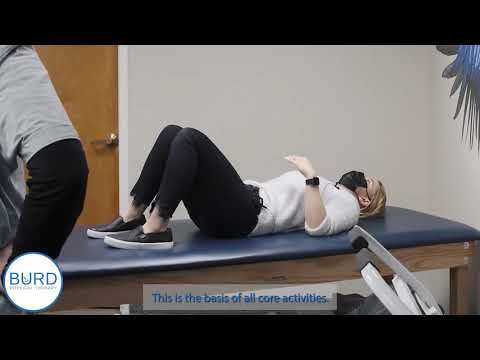
Every exercise above links to its own page with a video and step-by-step instructions. Here are two to start with.

What to expect
These are what published guidance usually says. Your own recovery may be faster or slower.
| Question | What sources say |
|---|---|
| Typical recovery | Most people improve gradually over days to weeks, and most are free of symptoms by 3–4 months. Flare-ups along the way are common.3 |
| Leg pain (sciatica) | Usually gets better in a few weeks to a few months, but it can last longer and can come back.2 |
| Longer term | About half of people with sciatica have improved significantly by 12 weeks, and about three quarters have recovered at one year.4 |
| When to move to the next stage | When the current exercises feel easy and any discomfort settles within about 2 hours. Increase gradually as you feel able.5,6 |
| When to see a doctor | If pain is not improving after a few weeks, is getting worse, or is stopping you doing normal activities.2 |
What to avoid or change for now
- Long periods of sitting or bed rest.
- Pushing through sharp pain or pain that spreads further down your leg.
- Bending forward or knee-to-chest stretches early on if they make your leg pain worse
- Sudden heavy lifting or twisting early on.
- Smoking, which is linked to faster wear of the spinal discs
When to get help
- Numbness around your bottom or genitals (the saddle area), or changed feeling when you wipe after using the toilet. Call 911 or go to the emergency department right away.1,7
- New trouble starting to pee, being unable to pee, or loss of control of your bladder or bowels. Call 911 or go to the emergency department right away.1,2,7
- A new change in sexual function, such as loss of feeling in the genitals during sex or trouble getting an erection or ejaculating. Go to the emergency department.7
- Sciatica in both legs, loss of feeling in one or both legs, or severe or worsening weakness or numbness in your legs. Go to the emergency department.1,2
- Back pain after a serious accident, such as a car crash. Call 911 or go to the emergency department.1
- Back pain with a fever or feeling hot and shivery, unexplained weight loss, swelling in your back, or pain that is worse at night. See a doctor promptly, the same day if you feel unwell.1
For a medical emergency, call 911 (US and Canada), 999 (UK), 000 (Australia) or 112.
Next steps
Related guides: Tailbone pain (coccydynia), or see all conditions.
Need a physical therapist? How to find one in the US or UK, including direct access and checking registration.
More exercises: browse the free exercise library, every one with a video.
Symptoms worse when standing or walking and easier when you sit or lean forward? That pattern is more typical of spinal stenosis.
Frequently asked questions
Should I rest or exercise with a herniated disc?
A day or two of rest can help if pain is severe, but staying off your feet longer than that is not recommended. Gentle activity such as walking, started as soon as you can, is commonly advised.
How long does a herniated disc take to heal?
Most people improve over days to weeks, and most are free of symptoms by 3 to 4 months. Flare-ups can happen along the way.
Can a herniated disc heal without surgery?
Yes, most do. Surgery is usually only considered when symptoms do not improve with other treatments, or when there is significant or worsening weakness, or loss of bladder or bowel control.
Is it OK if exercise hurts a little?
Some discomfort after exercise can be normal, but it should ease within about 2 hours. Sharp pain, or pain spreading further down the leg, is a sign to ease off and check with your clinician.
What should I avoid with a herniated disc?
Avoid anything that causes sharp pain or makes leg symptoms worse. Long periods of sitting and sudden heavy lifting or twisting are common triggers early on.
Sources
- NHS: Slipped disc
- NHS: Sciatica
- AAOS OrthoInfo: Herniated Disk in the Lower Back
- MSK Dorset (NHS): Back pain: leg pain (sciatica)
- Sussex Community NHS Foundation Trust: Sciatica: rehabilitation exercises
- Wrightington, Wigan and Leigh Teaching Hospitals NHS FT: Low back pain exercises: Level 1
- Torbay and South Devon NHS Foundation Trust: Cauda equina syndrome (CES)
Last checked October 2026. Found something out of date? Email hello@protocolarchive.com.
This guide summarizes published hospital, health-service and professional-body advice listed under Sources. It is general information, not medical advice, and does not replace an assessment by your own clinician, whose plan may differ for good reasons. Stop an exercise and get advice if it causes sharp or worsening pain. Protocol Archive is independent and is not affiliated with the NHS, AAOS or any hospital or video publisher named on this page.
Get one exercise a week by email
A short video, simple steps and a free printable routine, every Tuesday. Free, and you can unsubscribe anytime.
We only use your email for this newsletter. Privacy policy