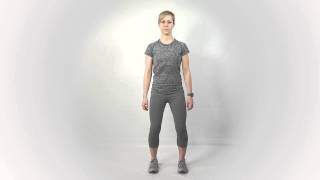
Chair Rise Strength Exercise
Talk to your doctor first. General education, not medical advice.This content is general education, not medical advice, diagnosis or treatment. Get approval from your physician or another qualified healthcare provider before starting any exercise program, especially if you have a medical condition, a recent injury or surgery, are pregnant, or take medication. Stop and seek medical advice if an exercise causes pain, dizziness, chest discomfort or shortness of breath. You choose to exercise at your own risk. Read the full medical disclaimer.

Build a full routine
Free routines with a printable sheet that cover similar ground:
Physical therapist or assistant? Add this exercise to a patient’s home program →
Guides that include this exercise
Gluteal tendinopathy exercisesHerniated disc exercisesKnee Pain ExercisesMeniscus tear exercises
Why it helps
Standing up from a chair is the most repeated strength task of daily life, and the ability to do it without using your hands is one of the best simple measures of leg strength in older adults. Practicing it on purpose builds the thigh and hip muscles that stairs, walking and balance depend on. This National Institute on Aging version uses only a sturdy chair.
The sit-to-stand is also the starting point for most knee and hip programs, because it loads the legs in a way the body already knows and it is easy to make harder or easier.
Step-by-Step Instructions
- Place a sturdy chair against a wall so it cannot slide. Sit toward the front of the seat with your feet flat, hip-width apart and slightly behind your knees.
- Cross your arms over your chest, or rest your hands on your thighs. Use the armrests if you need them.
- Lean forward from the hips so your nose is over your toes, breathe out, and stand up slowly, pushing through your whole foot.
- Stand fully upright and pause for a second.
- Breathe in and lower yourself slowly back to the seat, taking about 3 seconds. Touch down lightly rather than dropping.
Key Form Cues
- Nose over toes: Leaning forward puts your weight over your feet. Without it, the legs have to work much harder and you may rock back.
- Knees track over feet: Don’t let the knees fall inward as you stand. Press them gently outward in line with your second toe.
- Slow descent: The controlled lowering builds the most strength. Take at least 3 seconds.
How much to do
3 sets of 10, 2 to 3 days a week with a rest day in between. Add a set before you add difficulty.
Progression & Regression
Regression (Make It Easier)
- Push off the armrests or your thighs with your hands
- Sit on a firm cushion so the seat is higher
- Do 2 sets of 5
Progression (Make It Harder)
- Take 5 seconds to lower yourself
- Pause just above the seat for 2 seconds before sitting
- Hold a light weight against your chest, or use a lower chair
Who it suits, and who should check first
Good fit for: older adults building leg strength, knee and hip osteoarthritis, people who struggle to get out of low chairs or cars, and anyone starting a fall prevention program.
Check with your clinician first if: you have had a hip or knee replacement in the past 3 months (your surgeon will set the movement rules), your knee gives way, or you feel dizzy when you stand up.
Precautions
Low-load functional exercise suitable for most people.
- If you feel unsteady, keep a counter or walker in front of you, or have someone nearby.
- If the front of the knee hurts, sit on a higher seat and lower only part way until it settles.
- Mild thigh soreness the next day is normal when you start.
- Stop and consult your provider if: you feel sharp knee or hip pain, the knee locks or gives way, or you become dizzy or faint on standing.
Frequently asked questions
How many chair rises should I be able to do?
A common test counts how many you can do in 30 seconds without using your hands. Many adults over 65 manage 10 to 15. If you cannot do 8, that is a good reason to practice and to mention it to your clinician.
Why do I rock backward when I try to stand?
Your weight is too far behind your feet. Pull your feet back under the chair a little and lean further forward before you push.
What next?
Pair it with the knee curl, side leg raise and toe stand, all on the strength exercises for older adults sheet.