Prone Row
Talk to your doctor first. General education, not medical advice.This content is general education, not medical advice, diagnosis or treatment. Get approval from your physician or another qualified healthcare provider before starting any exercise program, especially if you have a medical condition, a recent injury or surgery, are pregnant, or take medication. Stop and seek medical advice if an exercise causes pain, dizziness, chest discomfort or shortness of breath. You choose to exercise at your own risk. Read the full medical disclaimer.

Build a full routine
This exercise isn’t on one of our printable sheets yet. These free routines cover similar ground:
Physical therapist or assistant? Add this exercise to a patient’s home program →
Why it helps
The muscles between and below the shoulder blades (the rhomboids and middle and lower trapezius) help hold the shoulder blade steady so the rotator cuff can work well. They are often weak in people with rounded shoulders.
Lying face down takes away the need to balance and removes body momentum, so the shoulder blade muscles do the work. It is a common part of posture and rotator cuff programs, along with prone Y-T-I raises.
Step-by-Step Instructions
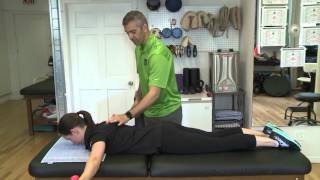
- Lie face down on a firm bed or bench, close to one edge, with your forehead resting on a folded towel.
- Let the arm on that side hang straight down toward the floor, holding a light weight if you have one.
- Squeeze the shoulder blade back and down first, then bend the elbow and lift it toward the ceiling.
- Stop when the elbow is level with your body, and hold for 1 to 2 seconds.
- Lower the arm slowly until it hangs straight again. Repeat, then switch sides.
What you’ll need Paid links
What this exercise uses, with household swaps where they work.
- Light dumbbells · Start light and build up slowly. Water bottles or food cans work to start.
Links go to Amazon search results, so you choose the product and price. We don’t recommend specific brands. As an Amazon Associate we earn from qualifying purchases, at no extra cost to you. How we make money
Key Form Cues
- Blade first: Start the movement by drawing the shoulder blade back.
- No shrug: Keep the shoulder away from your ear.
- Elbow stops level: Do not lift the elbow higher than your body.
How much to do
2 to 3 sets of 10 to 15 slow reps on each arm, 3 times a week. Start with no weight or a very light one.
Progression & Regression
Regression (Make It Easier)
- Do it with no weight
- Practice shoulder blade squeezes sitting or standing
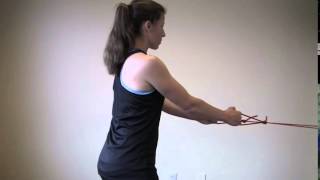
- Use a resistance band row while standing
Progression (Make It Harder)
- Add a slightly heavier weight
- Hold the top for 3 to 5 seconds
- Move on to prone Y-T-I raises
Who it suits, and who should check first
Good fit for: rounded shoulders, desk posture, upper back weakness, and later-stage rotator cuff and shoulder rehab.
Check with your clinician first if: you have had recent shoulder surgery, a shoulder dislocation, or pain when the arm hangs down.
Precautions
Light weight, good control.
- Choose a weight that lets you do every rep slowly with the shoulder blade moving back.
- Mild muscle tiredness between the shoulder blades is normal; sharp shoulder pain is not.
- Get up slowly afterward if you feel lightheaded from lying face down.
- Stop and consult your provider if: you feel sharp shoulder pain, clicking with pain, numbness or tingling down the arm, or pain that is worse the next day.
Frequently asked questions
What muscles does the prone row work?
Mainly the rhomboids, the middle trapezius and the rear shoulder. These muscles pull the shoulder blades back and support good posture.
How heavy should the weight be?
Start with no weight or a very light one, such as a small water bottle. Increase only when 15 slow reps feel easy.
Does the prone row help posture?
It strengthens the muscles that pull the shoulders back, which is one part of posture work. Pair it with a doorway chest stretch for tight chest muscles.
Video: BSR Physical Therapy on YouTube. We link to it because it shows the movement clearly; the written instructions and dosing on this page are our own general guidance.
Try next

Back to Exercise Library
Explore more exercises for every body region, each with a video and step-by-step instructions.