Wall Sit (Isometric Squat Hold)
Talk to your doctor first. General education, not medical advice.This content is general education, not medical advice, diagnosis or treatment. Get approval from your physician or another qualified healthcare provider before starting any exercise program, especially if you have a medical condition, a recent injury or surgery, are pregnant, or take medication. Stop and seek medical advice if an exercise causes pain, dizziness, chest discomfort or shortness of breath. You choose to exercise at your own risk. Read the full medical disclaimer.

Build a full routine
This exercise isn’t on one of our printable sheets yet. These free routines cover similar ground:
Physical therapist or assistant? Add this exercise to a patient’s home program →
Why it helps
Holding a squat without moving builds thigh (quadriceps) strength while keeping the knee still. For many people with knee pain this is easier to tolerate than squatting up and down.
Isometric holds are commonly used for patellar tendon pain, where they may ease pain for a while after the hold. The Spanish squat is a similar hold, and wall squats add movement once the hold is comfortable.
Step-by-Step Instructions
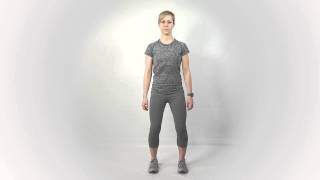
- Stand with your back flat against a wall and your feet about hip-width apart, roughly 1 to 2 feet out from the wall.
- Slowly slide your back down the wall, bending the knees to a shallow angle (about 30 to 45 degrees) to start.
- Check that your knees are over your ankles and in line with your second toes, not past your toes.
- Hold the position for 20 to 45 seconds, breathing steadily throughout.
- Slide back up the wall to standing, rest for 30 to 60 seconds, and repeat.
Key Form Cues
- Shallow first: Start with only a small knee bend; go deeper only as it gets easier.
- Breathe: Breathe steadily; never hold your breath.
- Knees in line: Keep the knees over the second toes, not falling inward.
How much to do
3 to 5 holds of 20 to 45 seconds, 3 to 4 times a week. Add time before adding depth.
Progression & Regression
Regression (Make It Easier)
- Stand higher with a smaller knee bend
- Hold for 10 to 15 seconds
- Do quad sets or short arc quads instead
Progression (Make It Harder)
- Slide lower, toward 60 to 90 degrees, if pain allows
- Hold for up to 45 to 60 seconds
- Move on to wall squats or split squats
Who it suits, and who should check first
Good fit for: patellar tendon pain, knee and thigh weakness, kneecap pain programs, and sport rehab.
Check with your clinician first if: you have high blood pressure or heart disease, recent knee surgery or injury, or knee pain that is sharp when you bend the knee.
Precautions
Breathe, and keep it shallow at first.
- Do not hold your breath; breath holding during a strain can raise blood pressure.
- Thigh burn is normal; knee pain should stay mild (up to 3 out of 10) and settle within 24 hours.
- If the front of the knee hurts, stand higher on the wall.
- Stop and consult your provider if: you feel sharp knee pain, dizziness, chest pain or shortness of breath, or knee pain is worse the next day.
Frequently asked questions
Are wall sits good for patellar tendinopathy?
Isometric holds like the wall sit are often used early in patellar tendon rehab because they load the tendon without movement. See the patellar tendinopathy guide for the full program.
How low should I go in a wall sit?
Start shallow, at about 30 to 45 degrees of knee bend. Go lower only if it stays comfortable for the knee.
Are wall sits safe with high blood pressure?
Isometric holds can raise blood pressure while you do them. Breathe steadily, keep holds short, and check with your doctor first if your blood pressure is high or not well controlled.
Video: MedStar Health on YouTube. We link to it because it shows the movement clearly; the written instructions and dosing on this page are our own general guidance.
Try next


Back to Exercise Library
Explore more exercises for every body region, each with a video and step-by-step instructions.